

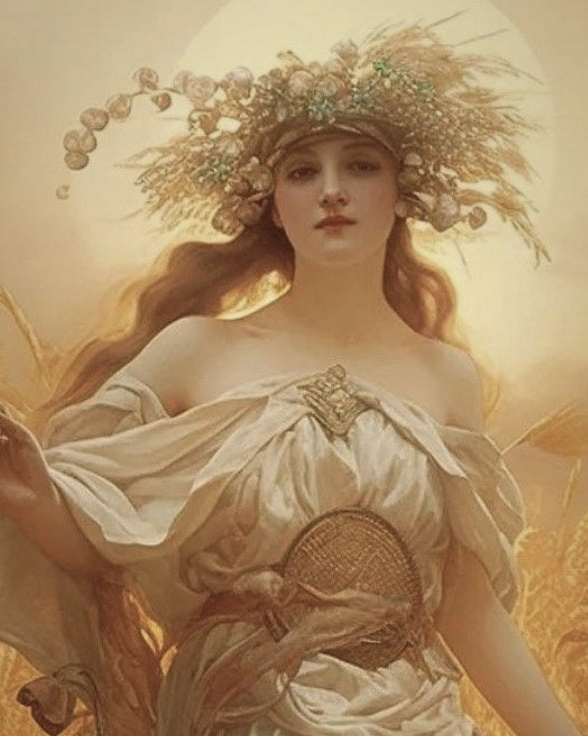
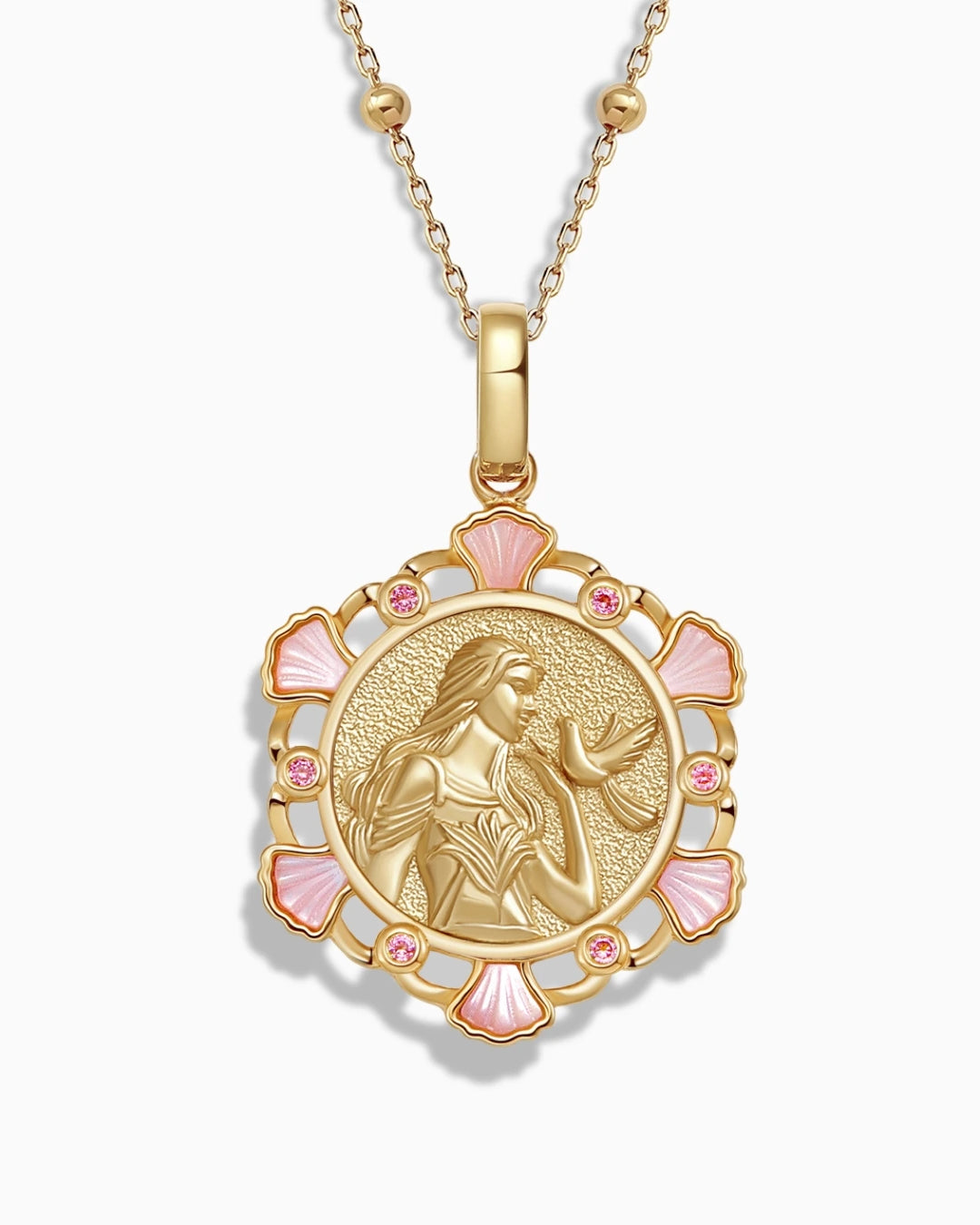

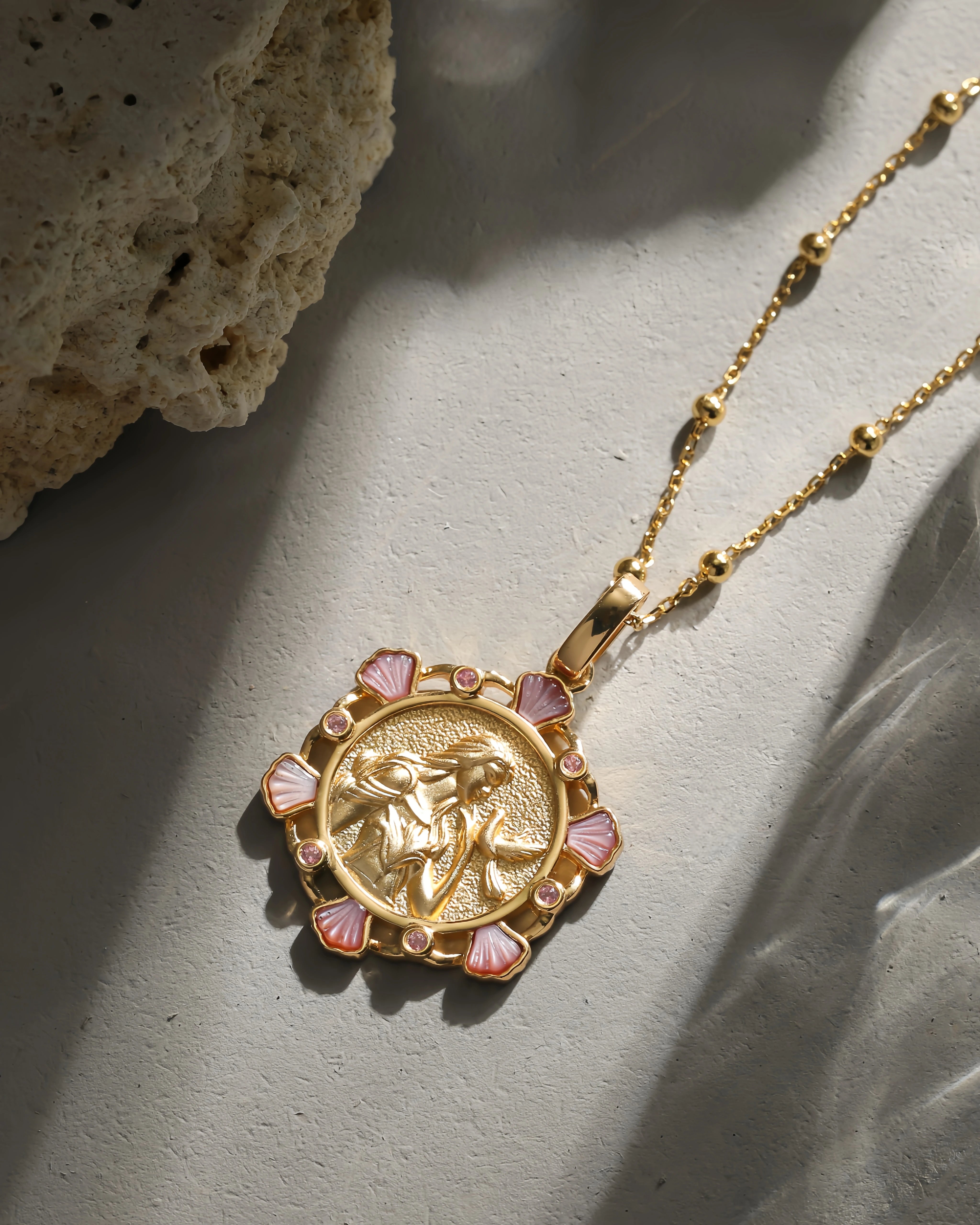
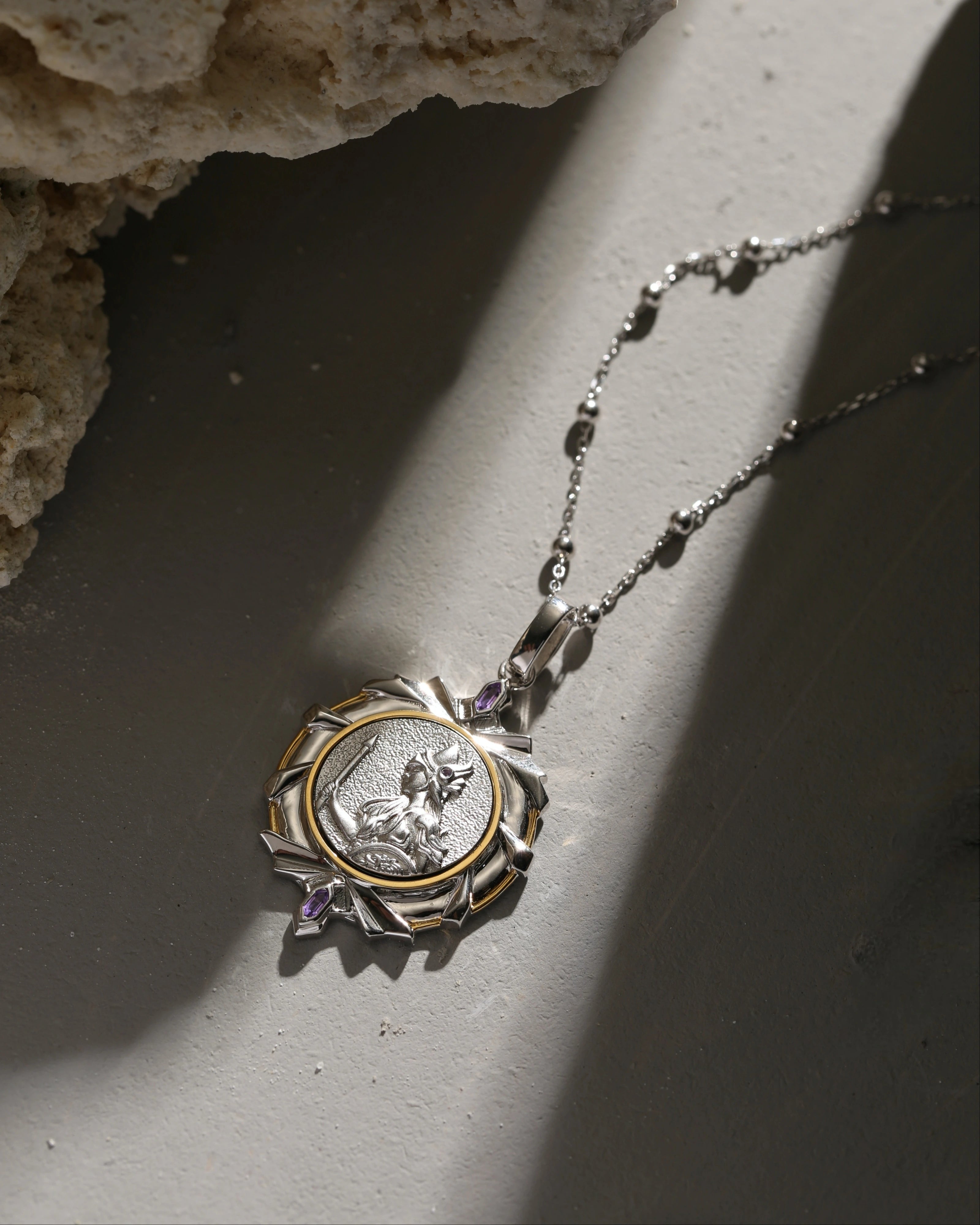


Not every woman meets Persephone as a real Powerful Queen at once. Some encounter her after descent has been lived through.
1. Who is the Persephone Goddess?
For many women, growth does not happen in a straight line. It unfolds through loss, waiting, withdrawal, and return. The myth of Persephone gives language to these often-unspoken phases—moments when identity shifts, innocence ends, and something new begins to form beneath the surface.
Seen through this lens, Persephone is not only a goddess of seasons, but a mirror of female experience. Her story reflects how women grow through descent, how strength develops in silence, and how renewal carries memory rather than erasing it. This is why her myth continues to resonate so deeply in modern women’s lives.
2. The Divine Story in Myth
To understand Persephone’s power, it is essential to return to her myth—not as a distant legend, but as a living story shaped by loss, initiation, and cyclical return. Her divine narrative unfolds through three key movements: the innocent daughter, the irreversible threshold, and the goddess who learns to move between worlds.
2.1 The Innocent Daughter
Persephone is the daughter of Demeter, goddess of the harvest and life-giving abundance. As a young maiden, she embodies innocence, fertility, and the promise of return—spring itself made flesh.
In Greek mythology, she is taken into the underworld by Hades, an event often described as an abduction—but never without consequence. Demeter does not quietly accept her daughter’s disappearance. She withdraws her gifts from the world. Crops fail. The earth turns barren. Life itself pauses.
It is Demeter’s rage and refusal—not compromise alone—that forces the gods to reckon with what has been taken. From the very beginning, Persephone’s story is not only about loss, but about a mother’s power to interrupt the cosmic order in defense of her daughter.
2.2 Pomegranate & the Eleusinian Mysteries
The resolution that follows forms the heart of the Eleusinian Mysteries, one of the most sacred initiation traditions of the ancient world. Persephone, having eaten the pomegranate seeds of the underworld, can no longer belong solely to one realm.
The pomegranate is not a punishment—it is a threshold.
By eating its seeds, Persephone accepts an irreversible transformation. She cannot return to innocence, nor remain only in darkness. She must learn to move between worlds.
This act marks her initiation: a passage through death, mystery, and return—mirroring the spiritual journey at the core of the Eleusinian rites.
2.3 Goddess Dual: The Spring Maiden & The Descender
From this new rhythm, the seasons are born. Persephone spends part of the year below as Queen of the Underworld, and part above as Maiden of Spring:
winter as descent, spring as return, summer as fullness, autumn as release.
This is not a story of good versus evil, nor light versus dark.
It is a myth of integration.
Persephone does not “escape” the underworld. She claims it.
She descends again and again—not as a victim, but as a sovereign of the threshold. She returns not as who she was before, but as a woman initiated into both loss and power, standing between death and life.
3. Why She Matters Today in Spirituality
Many modern women are not struggling because they are weak, but because they have spent years adapting—to relationships, expectations, and roles that slowly pulled them away from themselves. What they are often being called into is not surface-level change, but depth and transformation.
Persephone’s presence reminds women that accepting what cannot be undone is itself an act of courage. She appears not to erase the past, but to guide women through rebirth—learning how to live responsibly with what has been, honoring their experiences while consciously choosing how to move forward.
As Queen of the Underworld, Persephone faithfully guards the boundary between life and death, allowing the seasons to turn and the world to remain in balance. Her descent is not an end, but a preparation for return—an expression of feminine power that understands rhythm, patience, and becoming. Every descent of Persephone carries the promise of another blooming.
At the same time, Persephone is willing to remain in the darkest places with those who are connected to her energy—standing guard through the winter, offering quiet companionship, and helping women endure the cold with patience, until the next spring is ready to arrive.

4. What Is Persephone Goddess Of? (Deep Dive)
Persephone’s divinity cannot be understood through a single domain. Her power unfolds across both the visible rhythms of nature and the invisible processes of inner life. To know what Persephone is goddess of is to recognize how these two realms mirror and sustain one another.
4.1 Goddess of Seasons & Renewal
Persephone establishes the rhythm of the natural world. When she descends, the land enters winter. When she returns, spring comes back to life.
In this role, Persephone governs the visible cycle of life, death, and rebirth. Growth does not continue endlessly, nor does barrenness last forever. Each phase arrives in its own time and departs when its season is complete.
As a goddess of spring, Persephone does not eliminate winter in favor of eternal spring. She ensures that renewal happens because cycles are honored, not avoided.
4.2 Goddess of Shadow & Inner Growth
As Queen of the Underworld, Persephone governs the unseen dimensions of inner life. Her realm includes the unconscious, emotional dependency, inner child wounds, and subtle feminine intuition.
Unlike goddesses who act through assertion or command, Persephone’s influence unfolds through waiting, receiving, and gradual becoming. She presides over states where clarity is delayed, identity feels suspended, and growth happens below the surface.
In this way, Persephone represents inner growth that does not announce itself loudly. She offers a counterbalance to cultures that prioritize constant action, independence, and visible progress, reminding us that some forms of power mature only in stillness and shadow.
 5. Persephone Myth: Symbolism and Spiritual Lessons
Beyond what Persephone governs, her myth reveals how transformation is lived from the inside. Its symbols offer spiritual lessons not through instruction, but through experience—showing how descent and return shape awareness over time.
5.1 The Descent into the Underworld
In the Persephone myth, the descent into the underworld begins at a moment when life no longer feels the way it used to. Something familiar is lost.
A role, a relationship, a sense of direction quietly collapses.
Symbolically, this descent reflects a stage many women pass through: a time when energy drops, certainty fades, and forward momentum slows. Life turns inward. Decisions feel heavier. Waiting replaces action. Many Persephone symbols—darkness, seeds, enclosed spaces—belong to this phase, because growth is happening underground, away from view.
In the VidaWheel understanding, the underworld is not a place of punishment. It resembles those periods when answers do not come quickly, when identity feels undefined, and when pushing forward only creates more resistance.
Persephone’s presence in this realm gives meaning to these moments. She embodies a pattern women recognize intuitively: when escape is no longer possible, awareness deepens. Staying present becomes the work. Endurance becomes a form of intelligence.
For women moving through such phases, Persephone’s descent offers recognition. It names the experience, rather than trying to fix it.
5.2 Rebirth and the Return of Spring
Rebirth in the Persephone myth does not arrive dramatically. It shows up quietly, after time has passed. Energy begins to return. Interest in life reappears. Choices feel possible again.
Persephone does not leave the underworld behind. She moves between worlds. This movement shapes many Persephone symbols—seeds that sprout after long burial, cycles that repeat, seasons that shift without erasing what came before.
Psychologically, her return mirrors a stage many women recognize: life resumes, but differently. Boundaries are clearer. Sensitivity is deeper. What once felt automatic now feels intentional.
Within the VidaWheel framework, Persephone’s return reflects how growth follows rhythm rather than effort. After a period of descent and stillness, re-engagement happens naturally. Spring arrives when readiness is present.
Through Persephone, women recognize a form of renewal that does not rush healing or deny experience. Life continues, carrying depth forward.
6. Persephone Archetype in Modern Life (Transformation & Power)
When Persephone’s myth is read as an archetype, it begins to describe patterns that appear in modern women’s lives. Her story offers a framework for understanding how shadow, power, and transformation unfold through lived experience rather than abstract ideals.
6.1 Embracing Shadow Work
In modern life, Persephone’s shadow work is closely linked to the experience of being a daughter. This includes both inner relationships—how a woman relates to herself—and outer relationships shaped by family, authority, and early environments.
Many women encounter Persephone energy through childhood experiences that required them to respond too early to emotional complexity. Some grew up in families where they had to sense tension, manage expectations, or adapt to unstable dynamics long before they had the capacity to choose. Others learned to stay quiet, agreeable, or emotionally available in order to remain safe or valued.
As daughters, many women were not fully seen for who they were, but for what they represented: potential, hope, responsibility, or reflection of others’ desires. In some cases, this extended into experiences of being objectified or treated as something to be looked at rather than listened to. These moments—often subtle, cumulative, and unspoken—gradually form a psychological underworld.
Within the Persephone archetype, this underworld resembles Hades’ realm: a place shaped by power imbalance, silence, and lack of choice. It becomes a deep test, not because the pain is dramatic, but because it is lived slowly and repeatedly.
Persephone’s shadow work begins with recognition. By acknowledging these early wounds—without minimizing them or rushing past them—women begin to reclaim awareness where adaptation once replaced choice.
6.2 Goddess Energy for Personal Change
On a personal level, Persephone’s transformative power emerges through the ability to recognize and allow inner pain to exist. This recognition itself carries profound change.
Many women reach a point where constant effort, optimism, or self-reliance no longer stabilizes their inner world. Emotional weight lingers. Fatigue deepens. The familiar strategies stop working. Persephone’s energy becomes present in these moments, inviting a different response.
Rather than pushing forward or seeking immediate resolution, Persephone’s path involves stepping back—without avoidance and without urgency. This pause creates space for a deeper intelligence to surface, one that arises from the unconscious rather than the will.
Through this process, women begin to sense the rhythm of life more clearly: contraction and expansion, heaviness and lightness, descent and return. What once felt like failure or stagnation reveals itself as part of an evolutionary cycle.
In this way, Persephone supports personal change that unfolds through patience and presence. Transformation does not demand erasure of pain, but the capacity to remain with it until meaning reorganizes itself. The result is not dramatic reinvention, but a quieter, more grounded form of power.

7. Signs You Are a Persephone Goddess Woman(Or Temporary Connected to Her Energy)
Across love, work, and spirituality, Persephone energy favors depth, timing, and inner truth over speed, performance, or certainty.There are some specific signs that can make you and Persephone connected.
7.1 In Love, you are drawn to depth rather than certainty
A Persephone woman in love is less interested in control, speed, or guarantees. She is drawn to emotional depth, psychological honesty, and relationships that feel transformative rather than predictable. Love becomes a space where old patterns surface, not to be avoided, but to be understood.
7.2 In Love, you are drawn to depth rather than certainty
In professional life, Persephone energy favors work that carries inner meaning over constant upward momentum. She may experience pauses, redirections, or periods of invisibility, yet these phases often lead to deeper alignment rather than burnout-driven success.
7.3 In spirituality, you trust experience more than doctrine
Spiritually, Persephone women are guided less by rigid systems and more by lived experience. They are drawn to symbolism, inner states, and slow unfolding insight. Spiritual growth is felt as a process of descent and return, rather than belief or transcendence alone.
8. Persephone vs Other Goddesses (Comparison Table)
|
7 Goddess
|
Feminine
Archetype
Power
|
Goddess Feminine
Spirit
|
Vida Wheel
Vibrating Color*
|
VidaWheel Healing Cristal
|
|
Artemis
|
The Huntress
|
Liberty
|
Living Green
|
green crystal
|
|
Athena
|
Sage
|
Wisdom
|
Deep Blue
|
purple crystal
|
|
Hestia
|
The Mystic
|
Spiritual Awaken
|
Pure White & Radiant Gold
|
Moonstone
|
|
Hera
|
The Queen
|
Sovereignty
|
Radiant Gold
|
Ruby
|
|
Demeter
|
The Mother
|
Abundance
|
Sunlit Yellow
|
yellow crystal
|
|
Persephone
|
The Maiden & The Descender
|
Transformation
|
Midnight Black & Pomegranate Red
|
Obsidian
Garnet
|
|
Aphrodite
|
Lover
|
Creation&Love
|
Soft Rose
|
rose quartz
|
*VidaWheel Vibrating Color refers to the color frequency that resonates with a woman’s current life phase within the VidaWheel system.
9. Modern Expressions of Persephone Energy - Taking VidaWheel as an example.
Nowadays, myth and symbolism are being reawakened through feminism, fashion, and art. Women are turning back to ancient goddesses—not to recreate the past, but to draw strength and insight for modern life.
VidaWheel studies mythology, symbolic systems, ritual traditions, and feminine psychology, transforming ancient feminine wisdom into wearable spiritual necklaces. Through goddess-related symbols, natural gemstones, color resonance, and amulate design, each piece invites a quiet reconnection with inner wisdom.
We believe that when a woman reconnects with her sacred essence, that energy naturally becomes something to be shared, gifted, and carried forward.
9.1 Persephone Rebirth Necklace – Symbol & Meaning
Inspired by Persephone as Queen of the Underworld—the moment when shadow no longer frightened her and began to serve.
The crowned skulls chained around her are not symbols of loss, but of conquest. They speak of fear that has been faced, chaos that has been brought into order, and power that no longer needs to dominate to exist.
Black onyx carries the gravity of the underworld, grounding and steady. Garnet burns with the blood-memory of return—the quiet fire that remembers how to rise again.
Half shadow. Half fire.
Persephone Rebirth Necklace marks the presence of one who moves freely between worlds, carrying darkness without being claimed by it.
9.2 Persephone Spring Necklace – A Touch of Renewal
Inspired by the daffodil—the first flower to rise when winter loosens its grip. Persephone Spring Necklace makes this rebirth possible.
In the Persephone myth, spring does not arrive as innocence restored. It arrives as return. The daffodil marks the moment when life moves upward again, carrying memory rather than forgetting it.
Garnet anchors this return. It holds the weight of descent—the gravity of the underworld Persephone has endured and ruled. Its presence ensures that renewal does not float above experience, but grows from it.
Together, these elements honor Persephone not as a girl reclaimed, but as one who returns knowing both worlds. This piece carries Persephone’s Spring energy: renewal shaped by endurance, and hope that remembers what was survived.

10. Ritual and Presence: Living with Persephone Energy
Persephone’s energy is not only understood through myth or reflection—it is lived through presence and practice. Ritual and meditation offer ways to stay connected to her rhythm, allowing transformation to be experienced gently within everyday life.
10.1 Meditation with the Necklace
Meditation with the Persephone Necklace centers on presence rather than visualization. The piece acts as a gentle anchor, inviting attention to stay with what is unfolding instead of seeking immediate resolution.
During quiet transitions or moments of uncertainty, simply hold or wear the talisman and allow the body to settle. Attention rests on breath and sensation. Persephone Spring energy supports a grounded form of meditation, one that trusts inner timing and allows clarity to emerge naturally.
Step-by-Step Process(3–7 min)
-
Sit or stand comfortably. Wear or hold the necklace.
-
Place attention on physical sensation (weight, temperature, breath).
-
Do not visualize or analyze. Simply notice what is present and breath.
-
If thoughts arise, let it comes and go, and then return attention to the body slowly.
-
End the practice when attention naturally settles.
10.2 Rituals for Transformation
Rituals connected to Persephone energy are most effective when they are quiet, intentional, and repeatable. They do not require elaborate preparation — only consistency and honesty.
Simple practices may include wearing the necklace during phases of beginning, ending, or waiting, or pairing it with journaling and stillness. These small acts help mark inner transitions that often go unnoticed.
Persephone rituals do not remove difficulty. They create a container for change, allowing experiences to be acknowledged rather than suppressed. Transformation unfolds through attention, one season at a time.
A Simple Persephone Rebirth Ritual On a small piece of paper, write down what you are ready to transform—an old pattern, a fear, or a version of yourself that has reached its end. Fold the paper once. Hold the Persephone Rebirth Necklace in your hands and quietly name your intention. Imagine the words being absorbed into the weight of the piece. Wear the necklace as a marker of commitment, allowing the process to unfold without forcing outcome.
Affirmation Phrase: "In Persephone’s presence, what falls away is acknowledged. What remains, I carry by choice."
(Repeat seven times each day for seven days, following seven as a sacred rhythm of completion and renewal.)
11. FAQ – Persephone Goddess Explained
-
What is Persephone goddess of?
Persephone is worshipped as Kore (the Maiden) and as Queen of the Underworld, central to the Eleusinian Mysteries and associated with fertility symbols (pomegranate, grain) and the seasonal return.
-
Is Persephone a goddess of death?
She is not a “death goddess” in the sense of causing death; she reigns over the dead souls as Queen of the Underworld and serves as a powerful figure of the underworld realm.She rules the Underworld, often described as a "dread" goddess who judges souls and carries out curses.
-
What does Persephone symbolize spiritually?
She holds a dual role, ruling over the dead and presiding over the afterlife. She bridges the themes of life and death, representing seasonal cycles.
-
How does the Persephone archetype help modern women?
The Persephone archetype helps modern women understand transitions such as leaving the role of a daughter, carrying family expectations, losing direction, ending relationships, or redefining identity after loss—as necessary stages of inner transformation rather than weakness or failure.
-
Can I wear a Persephone necklace for healing energy?
A Persephone necklace is worn not as a cure, but as a symbolic anchor—supporting women, especially those moving beyond the "daughter" role, to stay present through loss, transition, and inner transformation.
-
What is the meaning behind the pomegranate?
In Persephone’s myth, the pomegranate symbolizes irreversible initiation—by eating its seeds, she binds herself to the underworld and accepts a transformation that cannot be undone.

