







Athena is one of the most recognized figures in Greek mythology. Known as the goddess of wisdom, strategy, and protective warfare, she represents a form of strength that is guided by intelligence rather than impulse.
Unlike many mythological gods associated with chaos or passion, Athena embodies clarity, discipline, and thoughtful action. Her stories often depict her as a guardian of cities, a counselor to heroes, and a strategist in times of conflict.
For many modern readers, Athena has become more than a mythological character. She represents a powerful archetype of the rational feminine — a woman who leads through wisdom, foresight, and inner composure.
1. Who Is Athena? Understanding the Goddess Beyond the Myth
Athena is one of the most recognized figures in Greek mythology. Known as the goddess of wisdom, strategy, and protective warfare, she represents a form of strength that is guided by intelligence rather than impulse.
1.1 Athena in Greek Mythology
In Greek mythology, Athena was famously born from the head of Zeus. According to the myth, Zeus swallowed her mother Metis while she was pregnant, fearing that the child might surpass him in power. Later, Athena emerged fully grown and armored from Zeus’s head.
From the beginning, she was associated with wisdom, strategic warfare, craftsmanship, and civic order. Unlike Ares, the god of chaotic battle, Athena represented thoughtful warfare — fighting only when necessary and always with strategy.
She also became the patron goddess of Athens, symbolizing the protection and prosperity of the city.
1.2 Why Athena Represents the Rational Feminine
Athena is often seen as the embodiment of the rational feminine. She represents a form of feminine strength rooted in clarity, strategy, and self-mastery.
Rather than acting from emotional impulse, Athena observes, plans, and responds with precision. In many myths, she stands in contrast to Ares, the god of chaotic war. While Ares charges into battle driven by rage, Athena guides heroes through strategy and intelligence.
For example, in The Odyssey, Athena protects and advises Odysseus during his long journey home. Instead of fighting for him directly, she helps him think strategically, disguise himself, and choose the right moment to reclaim his kingdom.
Through the stories, Athena represents a form of feminine authority grounded in wisdom, planning, and inner composure.
2. What Are Athena’s Thoughts About Her Inner Self?
Athena is rarely portrayed as a goddess ruled by impulse or emotional turbulence. In myth, she appears as a figure of clarity, strategy, and conscious action. Her inner identity is not centered on personal emotion but on purpose, responsibility, and the preservation of order.
2.1 Athena’s Inner Identity — Strategy Over Impulse
Athena’s inner identity is defined by strategy rather than impulse. In Greek mythology she is often contrasted with Ares, the god of chaotic war.
While Ares represents aggression and emotional fury, Athena represents calculated action. She observes before she moves, plans before she strikes, and seeks outcomes that preserve balance rather than create destruction.
A well-known example of this mindset appears in the myth of the founding of Athens. When the gods competed to become the protector of the city, Poseidon offered a dramatic gift — he struck the ground with his trident and created a spring of water. Athena, however, offered something more thoughtful and lasting: the olive tree.
The olive tree provided food, oil, wood, and long-term prosperity. Because her gift represented wisdom, sustainability, and strategic thinking, the people chose Athena as the city’s patron goddess.
From Athena’s perspective, true power lies not in dramatic force but in foresight — the ability to create stability and protection through wise decisions.
2.2 Self-Discipline as Sacred Power
Another defining aspect of Athena’s inner world is discipline. Her wisdom is not only intellectual but also moral. She uses power carefully and directs it toward protection rather than domination.
In many myths, Athena supports heroes who defend justice or protect the vulnerable. Her guidance often comes in the form of strategy, insight, or symbolic tools that allow others to act wisely.This reveals Athena’s deeper belief: power should be guided by wisdom, and wisdom should serve the protection of balance and justice.
3. Athena’s Relationship With Her Shadow Self
Athena is often imagined wearing armor — a powerful symbol of protection and strategic strength. Yet armor can also suggest emotional distance.
Because Athena values logic and control, she may avoid acting from vulnerability or emotional impulse. This does not mean emotion is absent, but rather that it remains carefully contained.
In archetypal psychology, this aspect of Athena reflects a pattern where clarity and intellect become the primary tools for navigating the world, sometimes leaving softer emotional experiences unexplored.
3.1 The Untouched Emotions Beneath the Armor
Athena is often imagined wearing armor — a powerful symbol of protection and strategic strength. Yet armor can also suggest emotional distance.
Because Athena values logic and control, she may avoid acting from vulnerability or emotional impulse. This does not mean emotion is absent, but rather that it remains carefully contained.
In archetypal psychology, this aspect of Athena reflects a pattern where clarity and intellect become the primary tools for navigating the world, sometimes leaving softer emotional experiences unexplored.
3.2 The Cost of Constant Strength
In modern life, many women resonate strongly with the Athena archetype. They become strategic thinkers, responsible leaders, and reliable problem-solvers.
However, when this archetype becomes too dominant, it can create pressure to remain strong at all times. Emotional needs may be postponed, vulnerability may feel unsafe, and the responsibility to “hold everything together” can become exhausting.
Recognizing this shadow aspect does not weaken the Athena archetype. Instead, it invites balance — allowing wisdom and strength to exist alongside emotional depth and human vulnerability.
4. Athena vs Ares — Inner War or Conscious Strategy?
In Greek mythology, Athena and Ares represent two very different expressions of power. Both are connected to war, yet the nature of their strength is fundamentally different.
Ares symbolizes raw aggression and emotional intensity. Athena, by contrast, represents strategic intelligence and disciplined action. Their contrast illustrates an important psychological dynamic: the difference between reacting from impulse and responding with awareness.
4.1 Impulsive Power vs Strategic Intelligence
Ares represents power driven by emotion. In myth he often rushes into battle without planning, embodying anger, aggression, and the thrill of conflict.
Athena represents a different approach. She studies the situation, anticipates consequences, and chooses actions that lead to sustainable outcomes.
Where Ares reacts, Athena calculates.
4.2 Destruction vs Protection
| Aspect | Athena | Ares |
| Inner Motivation | Protection & justice | Rage & domination |
| Emotional State | Composed | Reactive |
| Strategy | Calculated | Impulsive |
| Feminine Archetype | Wise Guardian | Raw Aggression |
5. What Athena Teaches Women About the Inner Self
Athena’s myth is not only a story about intelligence or strategy. At a deeper level, it reveals a model of inner authority — a way of holding strength without losing clarity, and leadership without losing balance.
For many modern women, the Athena archetype reflects the challenge of navigating responsibility, ambition, and emotional boundaries in a complex world.
Her story suggests that wisdom is not the absence of feeling, but the ability to guide emotion with awareness and purpose.
5.1 Wisdom as Emotional Sovereignty
Athena demonstrates that wisdom is not emotional coldness. Instead, it reflects a form of emotional sovereignty — the ability to remain grounded while making thoughtful decisions.
She does not suppress emotion entirely, but she does not allow emotion to dictate action. Her strength lies in balancing clarity with responsibility.
For women today, this archetype can represent the capacity to care deeply while still maintaining healthy boundaries.
5.2 Strength Without Losing Femininity
Another lesson of Athena is that strength and femininity do not need to exist in opposition.
Athena shows that intelligence, leadership, and courage can coexist with grace and dignity. A woman can be decisive without becoming harsh, and powerful without abandoning her sense of self.
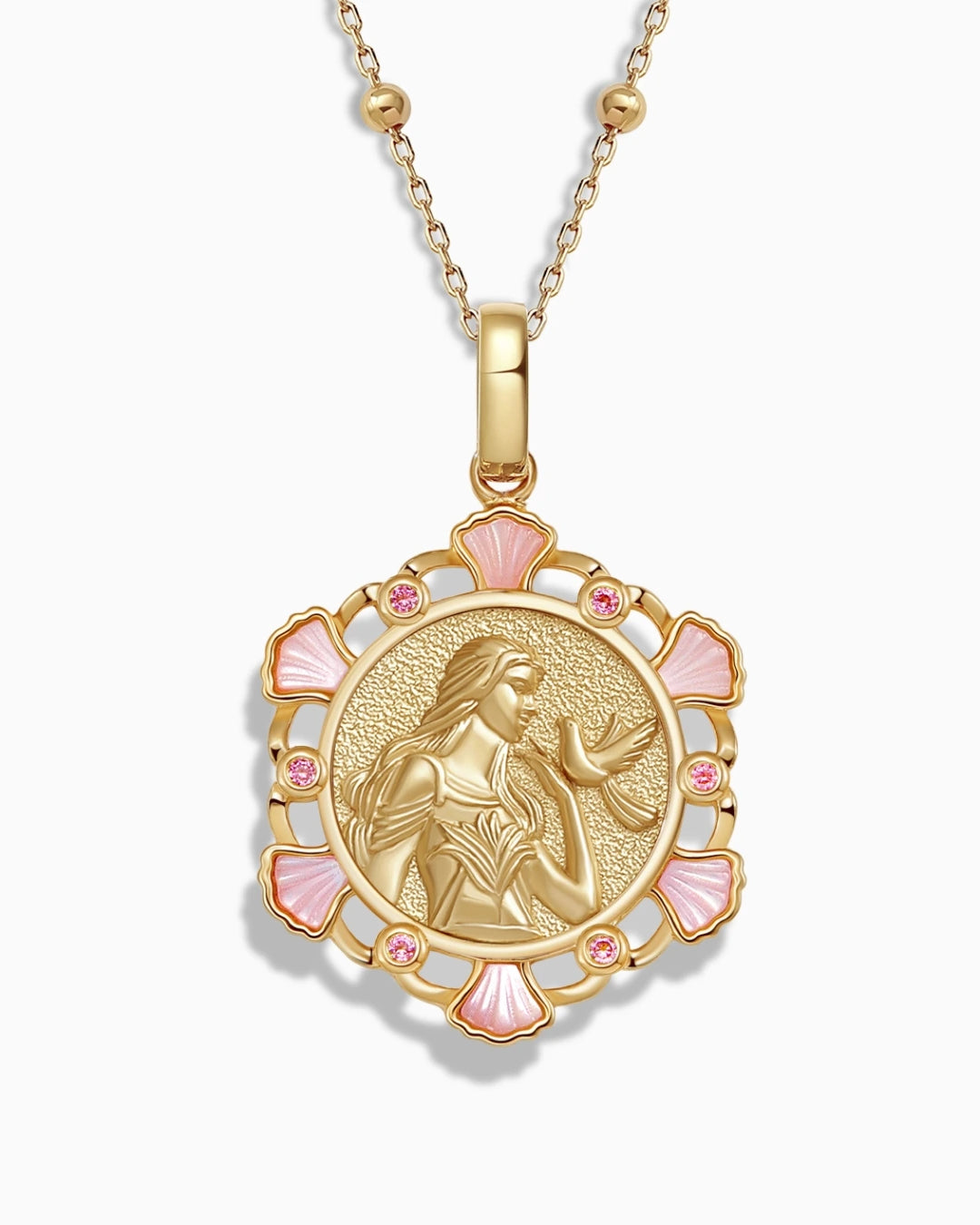
Because of this symbolism, some women choose meaningful objects as reminders of their inner strength. Many women choose symbolic pieces such as the Athena Battle Necklace to embody courage during transitional periods in life.
Rather than being decorative alone, these symbols can serve as quiet anchors — small reminders of the clarity, resilience, and wisdom a woman carries within herself.
6. Athena Archetype in Modern Psychology
In modern psychology, Athena is often understood as more than a mythological goddess. She can also be seen as an archetypal pattern — a recurring inner structure that shapes how some women think, decide, lead, and protect themselves. This way of understanding archetypes is closely connected to Jungian psychology, which views mythic figures as symbolic expressions of universal human energies.
6.1 The Warrior-Scholar Archetype
From a Jungian perspective, Athena can be understood as a warrior-scholar archetype. She combines intellectual clarity with strategic strength, making her a symbol of the woman who leads through reason, structure, and foresight rather than emotional reactivity.
This archetype often appears in women who are highly competent, mentally disciplined, and oriented toward solving problems. They may feel most confident when they can analyze a situation, create a plan, and move forward with purpose.
In feminine psychology, Athena also represents a way of surviving and succeeding in systems that reward logic, order, and achievement. She is the part of the psyche that knows how to stay composed, think ahead, and act with precision.
6.2 When Athena Archetype Is Unbalanced
Like all archetypes, Athena has a shadow side when her energy becomes too dominant. When rationality is overdeveloped, a woman may become disconnected from her emotional world.
She may appear highly capable on the outside while feeling inwardly distant, tired, or unable to access softer emotions. Vulnerability can start to feel inefficient or unsafe, and relationships may become harder to navigate with warmth and openness.
In this unbalanced form, Athena’s strength can turn into emotional isolation. The goal is not to reject her wisdom, but to bring it back into balance — so that intelligence and emotional depth can exist together.
7. How to Connect With Athena’s Inner Voice
Connecting with Athena’s inner voice is less about fantasy and more about cultivating clarity. Her energy often becomes accessible when a woman slows down, reflects, and chooses awareness over reaction.
7.1 Reflection Prompts Inspired by Athena
Athena’s energy can be explored through thoughtful self-inquiry. Questions like these can help reveal where strategy, clarity, and inner authority are needed most:
-
Where am I reacting instead of strategizing?
-
Am I protecting others but neglecting myself?
-
What situation in my life needs clearer boundaries?
-
Where do I need wisdom more than speed?
-
What would it look like to act from clarity instead of pressure?
These prompts are especially helpful during periods of conflict, career decisions, or emotional overwhelm.
7.2 Rituals and Symbolic Anchors
Some women connect with Athena through simple daily rituals. A short meditation focused on clarity, a few minutes of reflective journaling, or a “strategy journal” for organizing thoughts can all help strengthen this archetypal energy.
Symbolic objects can also play a role. Wearing a meaningful piece such as an Athena-inspired necklace may serve as a physical reminder of wisdom, courage, and self-command.
These practices are not about performance. They are quiet ways of returning to your inner center and embodying Athena’s energy in everyday life.
8. FAQ About Athena and the Inner Self
Did Athena Ever Doubt Herself?
Greek mythology does not clearly describe Athena doubting herself in the way modern psychology might frame self-doubt. She is usually portrayed as composed, decisive, and intellectually certain.
However, from her behavior, we can infer that Athena’s confidence comes from preparation, wisdom, and self-mastery rather than emotional spontaneity. Her steadiness suggests an archetype built on inner discipline rather than visible uncertainty.
Is Athena a Cold Goddess?
Athena is often misunderstood as cold because she is rational and emotionally contained. But rationality is not the same as emotional absence.
She does not lead through softness or emotional overflow, yet she repeatedly uses her wisdom to protect, guide, and preserve what matters. Athena is better understood as clear rather than cold, disciplined rather than detached.
What Does Athena Symbolize Spiritually?
Spiritually, Athena symbolizes wisdom, strategy, protection, and sacred boundaries. She represents the part of the soul that can see clearly, act with intention, and hold power without chaos.For many women, Athena’s spiritual meaning lies in the ability to stay centered during conflict, protect what is valuable, and move through life with intelligence and dignity.

